
Have you ever received a text that says “SMH” and wondered what the sender meant? This common internet expression appears in text messages, social media comments, and everyday online conversations. SMH stands for “Shaking My Head.” People use it to express disappointment, disbelief, frustration, or mild disapproval. Sometimes, it sounds sarcastic or playful. In other situations, it can feel critical.
Understanding what does smh mean requires more than knowing its full form. You also need to consider the conversation, the relationship between the people, and the tone behind the message. For example, a friend might use SMH to tease you about forgetting your wallet. Another person might use it to show serious disappointment. This guide explains its meaning, origin, variations, examples, and appropriate usage so you can recognize the expression and use it naturally.
SMH – Quick Meaning
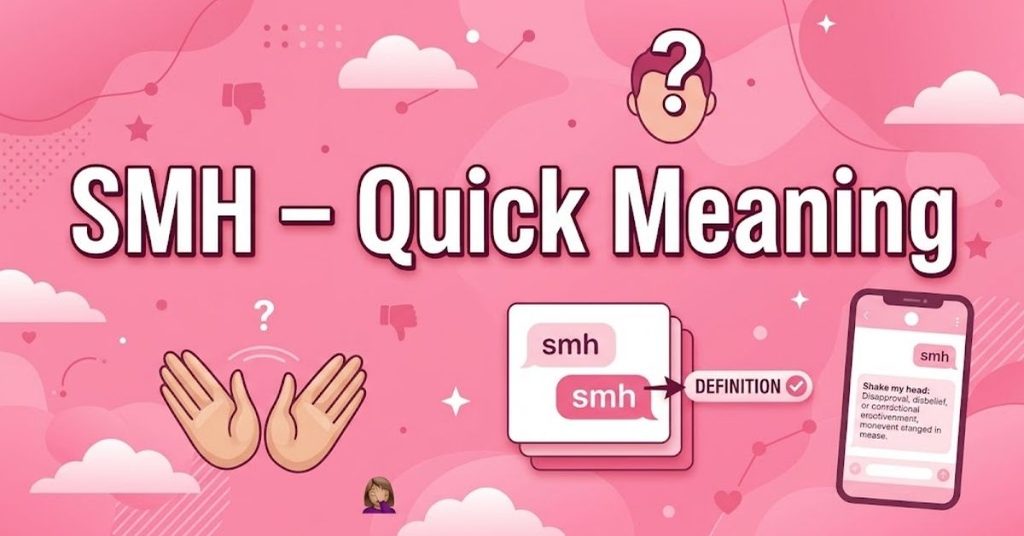
SMH is a popular abbreviation used in texting and internet slang. It stands for “Shaking My Head” and represents a reaction to something surprising, frustrating, or disappointing. Instead of physically shaking their head, people type SMH to communicate their feelings. You’ll often see it on WhatsApp, Instagram, TikTok, and other messaging platforms.
The meaning of SMH can change with the situation. Friends may use it jokingly, while strangers might use it to express disapproval. It doesn’t automatically mean anger or disrespect.
- Full form: Shaking My Head
- Main meaning: Disbelief, disappointment, or frustration
- Tone: Casual, sarcastic, playful, or critical
- Common places: Text messages, social media, and online forums
Example:
Person A: “I studied the wrong chapter for tomorrow’s exam.”
Person B: “SMH, you had one job!”
Here, SMH expresses playful frustration rather than serious anger.
Simple Definition:
SMH means “Shaking My Head,” a short internet expression that communicates disappointment, disbelief, frustration, or disapproval. People use it when someone’s actions or a situation seem silly, surprising, or difficult to believe. The abbreviation works like body language in text form because it replaces a physical gesture with written words.
For example, imagine your friend forgets an important appointment despite receiving several reminders. You might respond with “SMH” to show that you’re disappointed or surprised. The same abbreviation can also communicate humor between close friends.
- Disbelief: You can’t believe what happened.
- Disappointment: Someone failed to meet expectations.
- Frustration: A situation feels annoying or unnecessary.
- Sarcasm: You want to make a playful or critical point.
Conversation example:
Person A: “He forgot his own birthday.”
Person B: “SMH 😂”
The laughing emoji suggests that the reaction is humorous rather than harsh.
In Plain Terms:
In plain English, SMH is a quick way to say, “I can’t believe this,” “That’s disappointing,” or “What were you thinking?” The exact meaning depends on the situation. Someone might use it after hearing ridiculous news, watching a funny mistake, or reading an unbelievable social media post.
Think of SMH as a silent reaction. In face-to-face conversations, you might shake your head without saying anything. Online, the abbreviation communicates a similar feeling without requiring a long explanation.
Here are a few simple interpretations:
- “I can’t believe you did that.”
- “That was a poor decision.”
- “This situation is ridiculous.”
- “I expected something better.”
- “That mistake is almost funny.”
Conversation example:
Person A: “I left my wallet at home again.”
Person B: “SMH, check your pockets before leaving next time.”
The response shows mild frustration and friendly concern. It doesn’t necessarily mean the sender is genuinely angry.
Quick Examples:
The easiest way to understand SMH is to see how people use it in everyday conversations. This abbreviation often appears at the end of a sentence, although people also use it by itself. Its tone depends on the words, emojis, and relationship between the people communicating.
Here are some common examples:
- “Another delay? SMH.”
- “You ate my fries again? SMH 😂”
- “He posted the same selfie again. SMH.”
- “I can’t believe they canceled the event. SMH.”
- “You forgot your keys again? SMH, bro.”
- “People still believe that rumor? SMH.”
- “She studied the wrong chapter. SMH.”
Conversation example:
Person A: “I spent an hour looking for my phone.”
Person B: “Wasn’t it in your hand? SMH 😭”
This example combines disbelief with humor. The crying emoji adds an exaggerated reaction, making the message feel playful. However, without friendly context, the same abbreviation might sound judgmental.
Origin & Background
SMH developed within internet culture, where people needed quick ways to express reactions through written communication. Online forums, chat rooms, and SMS texting helped popularize short expressions and abbreviations. Character count limits also encouraged users to communicate feelings with fewer words.
SMH represents the physical action of shaking your head when something seems frustrating, disappointing, or unbelievable. Over time, people began using the abbreviation as a digital reaction rather than a literal description of movement.
Today, you’ll find SMH in text messages, memes, comments, and reaction posts across social media. Gen Z and younger users may combine it with emojis or other slang, although people of different ages use it too.
- Early internet culture: Short expressions spread through online communities.
- SMS texting: Abbreviations helped save space and typing time.
- Social media: Comments and memes expanded its reach.
- Modern usage: SMH functions as a quick emotional expression.
The exact history of its earliest use is difficult to establish without reliable historical records, so it’s best not to assign it a specific inventor or origin date.
Real-Life Conversations (How People Actually Use SMH)
SMH becomes easier to understand when you see it in realistic conversations. People use the abbreviation differently depending on the platform, relationship, and situation. A WhatsApp message between close friends may sound playful. A public comment about a serious mistake may express stronger disapproval.
You’ll often see SMH in Instagram DMs, TikTok comments, and ordinary text messages. It can appear alone or alongside other words, emojis, and internet slang. Reading the surrounding message helps you identify the intended meaning.
Consider these everyday situations:
- A friend forgets an important date.
- Someone repeats an obvious mistake.
- A person posts something surprising.
- A family member loses their keys again.
- A coworker makes an avoidable error.
Conversation example:
Person A: “I missed the bus because I was watching videos.”
Person B: “SMH, you knew what time it arrived.”
The sender expresses mild frustration while pointing out the mistake. Depending on their relationship, the response could sound teasing rather than insulting.
1. WhatsApp Chat
On WhatsApp, SMH usually appears in private messages between friends, relatives, or people who communicate regularly. It offers a quick way to react when someone shares disappointing news or admits making a silly mistake. The abbreviation can make a conversation feel casual because the sender doesn’t need to explain every emotion.
For example, friends might use SMH when someone forgets an appointment, loses their keys, or repeats an avoidable mistake. Emojis can soften the message or make the reaction more humorous.
Example conversation:
Person A: “I studied the wrong chapter for the exam 😭”
Person B: “SMH… I told you yesterday!”
Here, Person B expresses frustration because the mistake could have been avoided. However, the crying emoji and familiar relationship may make the exchange feel playful.
You can use SMH naturally in casual WhatsApp chats, but consider the other person’s feelings before using it during a sensitive conversation.
2. Instagram DMs
Instagram DMs often contain short messages, reactions, memes, and playful teasing. SMH fits naturally into these conversations because it communicates a reaction without requiring a long reply. Friends might use it when discussing a funny video, a surprising post, or something another person did.
For example, someone might share a screenshot of a friend posting the same selfie several times. The other person could reply with SMH to express disbelief or amusement.
Example conversation:
Person A: “He posted the same selfie again.”
Person B: “SMH, he really thinks that’s new content 😂”
The laughing emoji makes the comment sound teasing rather than hostile. Without that context, however, SMH might suggest criticism.
People also use the abbreviation when reacting to relationship drama or questionable online behavior. Before replying, consider whether the sender is joking, expressing genuine frustration, or inviting a serious discussion.
3. TikTok Comments
TikTok comments frequently feature internet slang, exaggerated reactions, and humor. SMH appears when viewers encounter an unbelievable decision, a funny mistake, or behavior they find disappointing. It can also appear alongside emojis such as 😂 and 💀 to create a more playful tone.
For example, imagine watching a video in which someone tries an unusual kitchen experiment. A viewer might respond with SMH because the result seems predictable.
Example conversation:
User 1: “This guy tried to microwave ice cream.”
User 2: “SMH, what did he expect? 💀”
The comment expresses disbelief while making fun of the situation. It doesn’t necessarily indicate serious anger.
On TikTok, the meaning also depends on the video’s purpose. A comedy clip may encourage exaggerated reactions, while a video about a serious issue may call for a more thoughtful response. Read the surrounding comments before assuming the abbreviation has a particular tone.
4. Text Message
In ordinary text messages, SMH helps people communicate frustration or disbelief quickly. It works well when both people understand the context and don’t need a detailed explanation. You might receive it after forgetting something, making an avoidable mistake, or sharing an unbelievable story.
Example conversation:
Person A: “I left my wallet at home.”
Person B: “SMH… classic you.”
The response suggests that forgetting things has become a familiar habit. Between close friends, it may sound affectionate or humorous. In another relationship, it could feel judgmental.
People sometimes combine SMH with phrases such as “again,” “seriously,” or “at this point.” These additions help communicate the sender’s reaction.
- “SMH, not again.”
- “SMH, seriously?”
- “SMH at this point.”
Use the abbreviation when a casual reaction fits the conversation. If the situation involves serious disappointment, explain your feelings clearly instead of relying on a short expression that someone might misunderstand.
Emotional & Psychological Meaning
SMH communicates more than a literal head movement. It acts as a small emotional signal in digital communication. Depending on the context, it may express disappointment, disbelief, frustration, mild disapproval, or second-hand embarrassment.
People often use it when they want to react without starting a long discussion. It can convey the feeling of seeing someone make an obvious mistake and silently wondering why they did it. In other situations, SMH adds humor to an awkward or ridiculous moment.
However, the abbreviation doesn’t reveal someone’s entire mindset. You can’t reliably determine whether a sender feels angry, amused, or genuinely disappointed from those three letters alone.
Common emotional meanings include:
- Disbelief: Something seems hard to believe.
- Frustration: A repeated problem feels exhausting.
- Disappointment: Someone’s actions fall short of expectations.
- Sarcasm: The sender wants to make a pointed comment.
- Second-hand embarrassment: Another person’s behavior feels awkward to watch.
Always consider tone and context before interpreting the message.
What It Usually Expresses:
SMH can communicate several emotions, and the surrounding conversation helps distinguish them. A friend who writes “SMH 😂” after a silly mistake probably isn’t expressing the same feeling as someone who writes “SMH” after a serious disappointment.
The abbreviation often signals a reaction rather than a complete argument. It tells the reader that something seems foolish, frustrating, or unbelievable.
Here are the most common meanings:
- Disappointment: “You forgot the appointment again. SMH.”
- Disbelief: “You paid that much for a broken phone? SMH.”
- Mild frustration: “Another delay? SMH.”
- Sarcasm: “Great job leaving the door open. SMH.”
- Second-hand embarrassment: “He waved at someone who wasn’t waving at him. SMH.”
Conversation example:
Person A: “I sent the message to the wrong group chat.”
Person B: “SMH 😭”
The reaction may combine embarrassment and humor. Still, context matters. A person dealing with a serious problem may need support instead of teasing.
Why People Use It:
People use SMH because it’s quick, familiar, and emotionally expressive. Rather than writing several sentences, they can communicate a reaction with three letters. This makes it useful in fast-moving conversations, especially when the situation already explains the sender’s feelings.
SMH can also soften a response when people want to tease someone without arguing. Friends may use it to acknowledge a silly mistake or express mild frustration. Others use it in memes and comments to react to public behavior.
Common reasons include:
- Reacting quickly without explaining everything.
- Showing disbelief or disappointment.
- Adding emotion to an otherwise plain message.
- Making a playful comment between friends.
- Expressing disapproval without starting a direct confrontation.
Conversation example:
Person A: “I forgot to set my alarm again.”
Person B: “SMH, tomorrow is your chance to get it right.”
The message combines frustration with encouragement. However, SMH isn’t always gentle. When used during serious emotional conversations, it may make someone feel dismissed instead of understood.
Usage in Different Contexts
SMH appears in many forms of digital communication, but its tone can change depending on the setting. A comment between friends may sound harmless, while the same abbreviation in a professional conversation may appear disrespectful. The relationship between the sender and receiver matters too.
On social media, people often use SMH to react to memes, mistakes, and surprising news. In private chats, it can become a familiar form of teasing. Professional settings require more care because short expressions can appear dismissive when readers can’t hear your voice.
Consider these factors before using SMH:
- Who will read your message?
- Is the situation serious or humorous?
- Does the other person understand your usual tone?
- Could your reaction embarrass or upset someone?
- Would a clear sentence communicate your meaning better?
SMH works best when the tone is obvious and the situation suits informal language.
1. Social Media
On social media, SMH commonly appears in comments, memes, reaction posts, and discussions. People use it to express disbelief about a video, disappointment in someone’s behavior, or frustration with a recurring problem. The abbreviation can also add sarcasm to a short comment.
For example, someone might see a post promoting a clearly questionable idea and comment, “People still believe this? SMH.” The expression communicates disapproval without a lengthy explanation.
Example conversation:
User 1: “They canceled the event at the last minute.”
User 2: “SMH, people planned their whole day around it.”
The response suggests disappointment about the inconvenience. On platforms such as Instagram, TikTok, and Twitter, emojis and surrounding comments may help clarify the intended tone.
Still, social media lacks many signals found in face-to-face communication. A short response can sound harsher than intended, especially when strangers don’t know the sender. Consider the audience before using SMH in a public discussion.
2. Friends & Relationships
Among friends, SMH often serves as a playful reaction to familiar habits and everyday mistakes. You might use it when someone forgets their keys, eats your food, or makes the same excuse for the third time. The expression can communicate mild frustration without turning the moment into an argument.
However, relationships differ. One friend may understand SMH as harmless teasing, while another may interpret it as criticism. The same message can also feel dismissive when someone shares personal worries.
Example conversation:
Person A: “You ate my fries again?”
Person B: “SMH, you left them unattended 😂”
Person A: “Those were still mine!”
The exchange sounds playful because both people continue the joke. If the conversation becomes serious, it’s better to explain your feelings directly.
In friendships and romantic relationships, pay attention to the other person’s response. If they seem hurt, clarify your intention instead of insisting that they should understand the joke.
3. Work or Professional Settings
SMH generally suits informal communication better than formal business writing. In workplace chats, it may communicate frustration about a repeated mistake or an unnecessary delay. However, colleagues may interpret it as passive-aggressive, dismissive, or unprofessional.
Imagine a teammate misses an important deadline. Replying with “SMH” doesn’t explain the problem or help solve it. A clear, respectful message usually works better.
Less helpful response:
“Another missed deadline? SMH.”
More professional response:
“The deadline has passed. Can we review what happened and agree on the next steps?”
The second response addresses the issue without embarrassing anyone. It’s especially useful when communicating with managers, clients, or people you don’t know well.
Avoid SMH in formal emails, sensitive feedback, and serious workplace discussions. In a close team where informal slang is common, it may be acceptable. Even then, consider whether the abbreviation adds value or simply makes your frustration more obvious.
4. Casual vs. Serious Tone
SMH can express anything from light teasing to strong disapproval. The difference usually comes from the context, the surrounding words, and the relationship between the people communicating. Emojis may offer clues, but they don’t guarantee a particular meaning.
| Tone | Example | Likely meaning |
|---|---|---|
| Casual | “You forgot your keys again. SMH 😂” | Friendly teasing |
| Neutral | “Another delay? SMH.” | Mild frustration |
| Sarcastic | “Brilliant idea. SMH.” | Critical humor |
| Serious | “You ignored the warning. SMH.” | Disappointment or disapproval |
Conversation example:
Person A: “I accidentally wore two different shoes.”
Person B: “SMH 😂”
Here, the reaction probably expresses amusement. However, if someone made a serious mistake with real consequences, the same abbreviation might sound harsh.
When you can’t identify the tone, read the full message and consider the relationship. If necessary, ask what the sender meant rather than assuming the worst.
Common Misunderstandings
SMH is simple, but readers sometimes misinterpret its emotional meaning. Some assume it always expresses anger, while others believe it must be rude. Neither interpretation is accurate in every situation.
The abbreviation represents a reaction, and people use it differently. Friends may use SMH as a joke, while someone discussing a serious problem may intend genuine disapproval. The sender’s usual communication style can also affect the meaning.
Common misunderstandings include:
- Assuming SMH always signals anger.
- Treating every use as an insult.
- Using it in formal communication without considering the audience.
- Overusing it until the expression loses its impact.
- Ignoring the context surrounding the message.
Conversation example:
Person A: “I forgot my lunch again.”
Person B: “SMH 😂”
Person A might laugh because the response feels familiar and playful. In a different situation, the same abbreviation could make someone feel embarrassed. Understanding tone is just as important as understanding the definition.
1. Thinking SMH Is Always Rude
SMH isn’t automatically rude. People often use it to express playful disappointment, disbelief, or mild frustration. Among close friends, it can be a familiar reaction to a silly mistake rather than an attempt to insult someone.
For example, a friend who writes “SMH, you did it again 😂” may be joking about a repeated habit. The emoji and the existing relationship help make that tone clear.
However, SMH can sound disrespectful when someone uses it to mock another person or dismiss a serious concern. A sarcastic response during an emotional conversation may cause more harm than the sender expects.
Conversation example:
Person A: “I locked myself out of the house.”
Person B: “SMH, how did you manage that? 😂”
The exchange may feel funny between friends. If the person is stressed or needs help, a more supportive response would be better.
Consider the situation before deciding whether SMH is harmless or rude.
2. Assuming It Means Anger
SMH can communicate frustration, but it doesn’t automatically mean anger. The abbreviation often expresses disbelief, disappointment, or mild disapproval. Sometimes, people use it simply because a situation seems ridiculous or amusing.
For example, imagine someone accidentally sends a message to the wrong group chat. A friend might respond with “SMH 😭” because the mistake is embarrassing and funny. That reaction doesn’t necessarily indicate hostility.
Conversation example:
Person A: “I walked into the wrong classroom.”
Person B: “SMH, that sounds like something you’d do 😂”
The response suggests playful teasing. By contrast, “SMH, you ignored everyone’s advice” may communicate serious disappointment.
To distinguish SMH from anger, look at the surrounding words and the conversation’s purpose. Does the sender continue joking, offer help, or explain a concern? Those details provide more useful clues than the abbreviation alone.
3. Using It in Formal Communication
SMH usually doesn’t belong in formal emails, official letters, or professional messages. Although the abbreviation is widely understood in many online settings, it can sound dismissive when you need to communicate clearly and respectfully.
For example, replying to a client with “SMH, another delay” may damage the conversation. It expresses frustration without offering a solution. A direct, professional response is more effective.
Instead of writing:
“Your team missed the deadline again. SMH.”
Try:
“The deadline has passed. Could you share an updated timeline and explain what caused the delay?”
The revised message identifies the issue and invites action. It also avoids unnecessary tension.
In workplace chats, SMH may be acceptable among colleagues who regularly use informal slang. However, consider your audience, company culture, and the seriousness of the topic before using it.
4. Overusing It
Like other texting shortcuts, SMH loses some of its impact when you use it too often. If every minor mistake receives the same reaction, your messages may start to sound repetitive or insincere. Friends may also feel that you’re criticizing them instead of having a genuine conversation.
For example, responding with SMH to every joke, question, and small inconvenience can make it difficult for others to understand your real feelings. They may not know whether you’re amused, annoyed, or genuinely disappointed.
Try varying your responses according to the situation:
- “That’s surprising!”
- “I can’t believe that happened.”
- “Oops, we’ve all been there.”
- “That sounds frustrating.”
- “Well, that didn’t go as planned.”
Conversation example:
Person A: “I forgot my notebook.”
Person B: “No worries. You can borrow mine today.”
A thoughtful reply sometimes works better than another abbreviation. Use SMH when it adds meaning, not simply because it’s easy to type.
When NOT to Use SMH:
SMH isn’t the best choice for every conversation. Although it works well in casual texting, it can sound dismissive when someone needs understanding or practical help. A short reaction may also leave the reader unsure about what you actually mean.
Avoid using SMH when:
- Someone shares personal or upsetting news.
- You’re offering a sincere apology.
- You need to resolve a serious disagreement.
- You’re writing a formal email or official message.
- Your response could embarrass someone publicly.
- The other person may misunderstand your humor.
Conversation example:
Person A: “I’m having a really difficult day.”
Person B: “SMH.”
That response may sound cold because it doesn’t acknowledge the person’s feelings.
A more supportive reply would be:
“I’m sorry you’re having a tough day. Want to talk about it?”
The better response shows concern and invites conversation. When a situation involves sensitive topics, empathy matters more than a quick reaction.
Comparison Table
SMH belongs to the wider world of internet slang, but it doesn’t mean the same thing as every other abbreviation. Some expressions communicate laughter or surprise, while others convey stronger shock or embarrassment. Understanding these differences helps you choose the right reaction.
| Term | Full form or meaning | Common tone | Typical use |
|---|---|---|---|
| SMH | Shaking My Head | Disbelief or disappointment | Reacting to a mistake |
| LOL | Laughing Out Loud | Amused | Responding to something funny |
| OMG | Oh My God | Surprise or excitement | Reacting to unexpected news |
| WTF | What the F— | Strong shock or frustration | Expressing an intense reaction; may offend |
| Facepalm | A gesture of covering the face with a hand | Embarrassment or frustration | Reacting to an obvious mistake |
| Sigh | An expression of tiredness or frustration | Weariness | Showing disappointment or emotional exhaustion |
These expressions can overlap, but their meanings depend on context. LOL usually signals amusement, while SMH more often suggests disbelief or disapproval.
Key Insight:
SMH sits somewhere between a quiet sigh and a stronger expression of disbelief. It often communicates disappointment without requiring a direct confrontation. However, its intensity depends on the situation and the sender’s wording.
Consider these examples:
- SMH: “You forgot the appointment again.” This suggests disappointment.
- LOL: “You wore your shirt inside out.” This suggests amusement.
- OMG: “You won the competition!” This expresses surprise or excitement.
- Facepalm: “You sent the draft without attaching the file.” This highlights an avoidable mistake.
- Sigh: “The train is delayed again.” This suggests tired frustration.
Conversation example:
Person A: “I forgot to attach the document to my email.”
Person B: “SMH, double-check it before sending the next one.”
The reply combines mild frustration with practical advice. Choose the expression that matches your actual reaction instead of treating every abbreviation as interchangeable.
Variations / Types of SMH
People often combine SMH with other words to change the tone or add emphasis. These variations appear in text messages, memes, comments, and informal conversations. Although the central meaning remains “Shaking My Head,” the added words can communicate humor, stronger frustration, or familiarity.
Here are common variations:
- SMH my head: A deliberately redundant expression often used jokingly.
- SMH so hard: Emphasizes a strong reaction.
- SMH fr: Adds “for real” to express sincerity.
- SMH lol: Mixes disbelief with amusement.
- SMH at this point: Suggests ongoing frustration.
- SMH y’all: Addresses a group.
- SMH bro: Adds a casual, familiar tone.
- SMH again: Highlights a repeated problem.
- Big SMH moment: Describes an especially unbelievable situation.
- SMH seriously: Emphasizes disappointment or disbelief.
Conversation example:
Person A: “He forgot his keys for the third time.”
Person B: “SMH at this point 😭”
The variation suggests that the repeated mistake has become frustrating or amusing. These expressions are informal, so use them where casual internet slang fits.
How to Respond When Someone Uses SMH
Your response should depend on the sender’s tone and the situation. If a friend uses SMH to tease you, a playful reply may keep the conversation light. If someone expresses genuine disappointment, acknowledging the problem may work better than making another joke.
Before responding, consider whether the sender seems amused, frustrated, or serious. Emojis and surrounding messages can help, but they don’t always reveal the person’s full intention.
You can choose from several response styles:
- Casual replies: “Okay, okay, I get it 😂”
- Funny replies: “I’ll try to do better next time.”
- Mature replies: “Fair point. I’ll fix it.”
- Respectful replies: “I understand why you’re frustrated.”
Conversation example:
Person A: “You forgot the meeting again. SMH.”
Person B: “You’re right. I should’ve checked my calendar.”
This response accepts responsibility without escalating the conversation. If you don’t understand the sender’s tone, ask a simple question instead of assuming they’re trying to insult you.
Casual Replies
Casual replies work well when the sender uses SMH playfully or when both people share a relaxed communication style. These responses keep the conversation moving without making a small mistake feel like a major problem.
Here are some natural options:
- “Okay, okay, I get it 😂”
- “My bad!”
- “I know, that was silly.”
- “Give me a break!”
- “It happens sometimes.”
- “I’ll do better next time.”
Conversation example:
Person A: “You forgot your charger again. SMH.”
Person B: “My bad! I’ll keep a spare in my bag.”
The response acknowledges the mistake and offers a simple solution. It doesn’t turn a minor issue into an argument.
Casual replies work best when the conversation feels friendly. If the other person seems genuinely upset, avoid brushing off their concern with jokes. Acknowledge the issue first, then respond in a way that suits your relationship.
Funny Replies
Funny replies can turn SMH into a playful exchange when both people understand the joke. They work especially well between friends who regularly tease each other. However, humor should match the situation rather than make someone feel embarrassed.
Try these lighthearted responses:
- “My brain took a short vacation.”
- “Mistakes are part of my personal brand.”
- “I’m saving my smart decisions for tomorrow.”
- “Please allow one silly moment per day.”
- “Even my calendar has given up on me.”
Conversation example:
Person A: “You walked into the wrong room. SMH 💀”
Person B: “I was checking whether the room had improved.”
The reply adds humor without attacking the other person. It works because the mistake is relatively harmless.
Funny replies aren’t ideal for every situation. If someone uses SMH while discussing a serious problem, a joke may make them feel ignored. Read the situation before deciding whether humor will help.
Mature / Confident Replies
Mature replies work best when SMH expresses genuine disappointment or criticism. Rather than reacting defensively, acknowledge the point and explain what you’ll do next. This approach keeps the conversation focused on the issue instead of turning it into a personal conflict.
Useful responses include:
- “Fair point. I’ll correct it.”
- “You’re right. I should’ve checked.”
- “I understand what went wrong.”
- “I’ll make sure it doesn’t happen again.”
- “Let’s focus on fixing the problem.”
Conversation example:
Person A: “You missed the deadline again. SMH.”
Person B: “You’re right to raise that. I’ll send an updated timeline today.”
The reply demonstrates accountability without accepting unfair criticism automatically. You can acknowledge a valid concern while calmly explaining your side when needed.
Confident communication doesn’t require sarcasm or hostility. A clear response often shows more maturity than arguing over a three-letter abbreviation.
Respectful / Private Replies
Sometimes, SMH appears during a sensitive conversation or after someone expresses disappointment. In these situations, a respectful reply may help prevent misunderstanding. If the sender’s message feels dismissive, consider asking for clarification privately rather than starting a public argument.
You could respond with:
- “I understand why you feel that way.”
- “Can we talk about what happened?”
- “I didn’t mean to upset you.”
- “Could you explain what bothered you?”
- “Let’s discuss this privately.”
Conversation example:
Person A: “You didn’t tell me about the change. SMH.”
Person B: “I can see why that upset you. Can we talk and clear things up?”
This response acknowledges the concern without assuming the sender intended to be rude. A private conversation can help both people explain their feelings and resolve the issue.
When emotions run high, clear communication usually works better than trading short, sarcastic messages.
Regional & Cultural Usage
SMH appears in online conversations across many countries, especially where English-language internet slang is familiar. However, people don’t interpret every abbreviation in exactly the same way. Age, language ability, personal habits, and familiarity with social media can influence how someone understands it.
In some communities, SMH may be common among younger users but unfamiliar to people who rarely use messaging apps. Non-native English speakers may recognize the abbreviation through memes or online videos, while others may need an explanation.
Keep these points in mind:
- English slang spreads through social media and online communities.
- People may interpret sarcasm differently across cultures.
- Familiarity with texting shortcuts varies by age and experience.
- The same abbreviation can feel playful or critical in different relationships.
It’s better to avoid broad claims about entire regions. Western, Asian, and Middle Eastern communities all include people with different communication styles. Context remains more useful than assuming someone will interpret SMH a certain way because of where they live.
Western Culture
In English-speaking Western online communities, SMH commonly appears in texting, memes, social media comments, and informal conversations. People may use it to express disbelief about public events, frustration with everyday mistakes, or playful disappointment among friends.
For example, someone might comment “SMH” under a post about an avoidable mistake. Another person might use it in a group chat after a friend forgets an appointment.
Conversation example:
Person A: “He canceled the plan five minutes before we left.”
Person B: “SMH, we were already on our way.”
The reply communicates frustration about the inconvenience. Depending on the relationship, it may sound serious or simply conversational.
However, not everyone in Western culture uses or recognizes internet slang equally. Some people prefer full sentences, especially in professional communication. Consider the individual and setting rather than assuming the abbreviation always carries the same tone.
Asian Culture
SMH also appears among internet users in Asian countries, particularly in online communities where English slang is common. People may encounter it through TikTok, Instagram, gaming chats, memes, and international discussions.
Its familiarity varies widely. Some users regularly combine English abbreviations with local languages, while others prefer expressions in their first language. Cultural background alone doesn’t determine whether someone understands SMH or considers it rude.
Conversation example:
Person A: “I forgot my presentation file before class.”
Person B: “SMH, make sure you save a backup next time.”
The response shows mild frustration and offers practical advice. Between friends, it could sound casual rather than insulting.
Cross-cultural misunderstandings can occur when a short English expression lacks the tone or context that a longer message might provide. If you’re unsure whether someone understands SMH, use a clear sentence instead. That small adjustment can make communication easier.
Middle Eastern Culture
SMH can appear in Middle Eastern online conversations, particularly among people who use English alongside Arabic, Urdu, and other languages. Social media, messaging apps, and international internet culture help spread short expressions across language communities.
However, usage varies by person, age group, language preference, and online habits. It’s inaccurate to assume that everyone in the region uses SMH or interprets it identically.
Conversation example:
Person A: “I forgot the appointment even after setting a reminder.”
Person B: “SMH, set another reminder for next time.”
The response may sound like friendly teasing between people who understand each other’s communication style. In a serious conversation, though, the same abbreviation might appear dismissive.
If you’re communicating with someone who may not know English slang, write the intended meaning in plain language. Clear wording can prevent cross-cultural misunderstandings and reduce the risk of sounding disrespectful.
Global Internet Usage
SMH has spread through digital communication, including text messages, online forums, chat rooms, memes, and social media comments. Its short form makes it easy to use across many platforms. People who regularly consume English-language content may recognize it even if English isn’t their first language.
Still, global exposure doesn’t mean universal understanding. Some users know the abbreviation immediately, while others may confuse it with an unfamiliar acronym. Context helps readers understand whether the sender expresses frustration, humor, or disbelief.
Example conversation:
Person A: “I watched the whole tutorial and still skipped the first step.”
Person B: “SMH, start from the beginning this time.”
The response conveys mild frustration while suggesting a solution.
As internet slang evolves, expressions can gain new uses or fall out of fashion. SMH remains recognizable in many online spaces, but its popularity can vary by platform and audience. When clarity matters, spell out your meaning rather than relying entirely on slang.
FAQs
These frequently asked questions explain the meaning of SMH, its tone, and how people use it in everyday communication. They also cover professional etiquette, related expressions, and common misunderstandings.
1. What Does SMH Mean in Texting?
SMH stands for “Shaking My Head.” In texting, people use it to express disappointment, disbelief, frustration, or mild disapproval. It can also communicate playful teasing between friends.
Example:
Person A: “I forgot my wallet at home.”
Person B: “SMH, check before leaving next time.”
The message suggests mild frustration, but it doesn’t necessarily mean the sender is angry. The relationship and surrounding conversation help determine the tone.
2. Is SMH Rude?
SMH isn’t always rude. Friends may use it jokingly when someone makes a silly mistake or repeats a familiar habit. However, it can sound critical or dismissive when used during a serious discussion.
Example:
“ You ate my fries again? SMH 😂”
The emoji suggests playful frustration. Without that friendly context, the message might sound more judgmental. Consider the other person’s feelings before using the abbreviation.
3. Can I Use SMH in Professional Emails?
It’s generally better to avoid SMH in professional emails. The abbreviation can sound informal, sarcastic, or dismissive, especially when discussing deadlines or mistakes. Clear wording helps maintain a respectful tone.
Instead of writing “Another delay? SMH,” try:
“The project has been delayed again. Could you share an updated timeline?”
This version explains the concern and encourages a useful response.
4. Does SMH Mean Anger?
SMH doesn’t automatically mean anger. It more commonly expresses disbelief, disappointment, frustration, or mild disapproval. Some people also use it humorously.
For example, “SMH 😂” after a harmless mistake may signal playful teasing. However, “SMH, you ignored every warning” can communicate serious disappointment. Read the surrounding message before deciding how the sender feels.
5. What Is the Opposite of SMH?
SMH often expresses disappointment or disapproval, so possible opposites include “Well done,” “Respect,” “Impressive,” and “I’m proud of you.” The best choice depends on what happened.
Example:
Person A: “I finally passed my exam!”
Person B: “Well done! You worked hard for it.”
Unlike SMH, this response communicates approval and encouragement.
6. Is SMH Still Popular?
SMH remains recognizable in many online conversations, including text messages, memes, and social media comments. However, its use can vary by age group, platform, and community. New expressions appear regularly, but familiar abbreviations often remain useful because people already understand them.
You may still see SMH alongside emojis and newer internet slang. Its continued presence doesn’t mean every user relies on it or considers it trendy.
7. Can SMH Be Funny?
Yes. People often use SMH humorously when someone makes a harmless mistake or behaves in an amusing way. Emojis and playful wording can help signal that the sender is joking.
Example:
Person A: “I searched everywhere for my glasses while wearing them.”
Person B: “SMH 😂 how does that even happen?”
The response expresses disbelief while making light of the situation. Still, humor depends on the relationship and context. Avoid joking when someone needs genuine support.
Conclusion
SMH stands for “Shaking My Head,” a common abbreviation in internet slang and everyday digital communication. People use it to express disappointment, disbelief, frustration, sarcasm, or playful disapproval. You’ll often see it in text messages, WhatsApp chats, Instagram DMs, TikTok comments, and online memes.
Understanding what does smh mean also involves recognizing tone and context. A friend might use SMH to joke about a forgotten wallet, while a colleague could interpret it as criticism. The abbreviation isn’t automatically rude or angry, but it may sound dismissive in sensitive conversations or professional emails.
Use SMH when a quick, casual reaction fits the moment. If someone shares upsetting news or raises a serious concern, choose a thoughtful response instead. Ultimately, understanding this short internet expression helps you read online conversations more accurately and communicate with greater confidence.
